
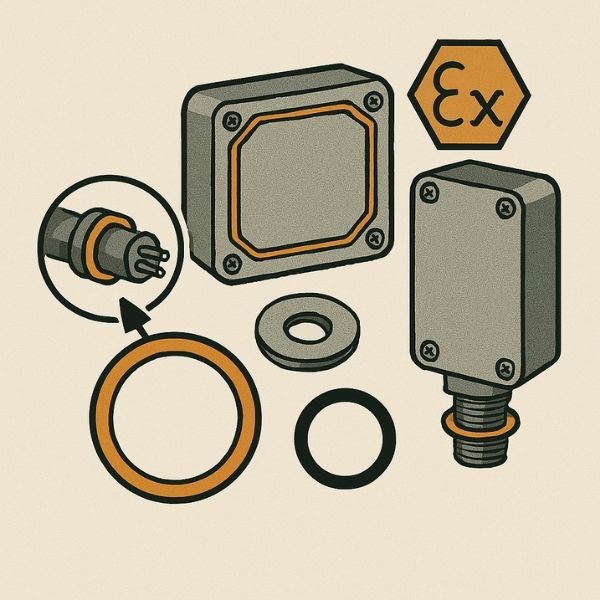
In hazardous environments where explosive atmospheres (Ex zones) exist, enclosure integrity is not just a best practice—it’s a lifeline. The smallest failure in a seal, gasket, or O-ring can lead to catastrophic consequences, including fires, explosions, and equipment damage.
Yet, many industries overlook the critical maintenance of these seemingly minor components—until it’s too late.
This guide explains why regular inspection, replacement, and proper installation of seals, gaskets, and O-rings in Ex enclosures are essential for compliance, safety, and long-term cost savings.
Why Seals, Gaskets, and O-Rings Are the First Line of Defense in Ex Enclosures
Ex enclosures (explosion-proof or flameproof enclosures) are designed to contain sparks, arcs, or explosions within the housing, preventing them from igniting the surrounding hazardous atmosphere.
However, their effectiveness depends entirely on a perfect seal.
Here’s how each component plays a role:
1. Seals (Flame Paths)
- Purpose: Prevent the escape of flames or hot gases from the enclosure.
- Common Types:
- Threaded seals (for screw-on lids)
- Flat gasket seals (for flanged enclosures)
- Labyrinth seals (for high-pressure applications)
- Failure Risk: If corroded, deformed, or improperly tightened, seals can allow flame propagation, defeating the enclosure’s purpose.
2. Gaskets (Compression Seals)
- Purpose: Provide a gas-tight barrier between mating surfaces.
- Common Materials:
- Nitrile (NBR) – Good for oil resistance
- Silicone – High-temperature resistance
- Viton (FKM) – Chemical and extreme temperature resistance
- Neoprene – General-purpose, weather-resistant
- Failure Risk: Compression set (permanent deformation), chemical degradation, or improper installation can lead to leaks.
3. O-Rings (Dynamic & Static Seals)
- Purpose: Prevent fluid or gas leakage in cable entries, doors, and joints.
- Common Materials:
- EPDM – Weather and ozone resistant
- PTFE (Teflon) – Chemical-resistant, low friction
- HNBR – High-temperature and oil-resistant
- Failure Risk: Pinching, twisting, or hardening over time can cause loss of elasticity, leading to leaks.
The Hidden Dangers of Neglecting Seal Maintenance in Ex Enclosures
1. Loss of Explosion Protection (Ex Certification)
- ATEX, IECEx, and NEC 500/505 standards require that enclosures maintain their IP (Ingress Protection) and Ex ratings.
- A damaged gasket or degraded O-ring can void certification, making the equipment non-compliant and unsafe.
2. Increased Risk of Ignition & Explosions
- Even a microscopic gap can allow flammable gases or dust to enter the enclosure.
- If an internal spark occurs, the enclosure may fail to contain the explosion, leading to disastrous consequences.
3. Accelerated Corrosion & Equipment Failure
- Moisture ingress (due to failed seals) leads to:
- Rust in metal enclosures
- Short circuits in electrical components
- Premature failure of sensitive instruments
4. Costly Downtime & Regulatory Fines
- Unplanned shutdowns for emergency repairs.
- OSHA, ATEX, or local authority penalties for non-compliance.
- Higher insurance premiums due to increased risk.
Best Practices for Maintaining Seals, Gaskets, and O-Rings in Ex Enclosures
1. Regular Inspection Schedule
| Component | Inspection Frequency | What to Check |
|---|---|---|
| Seals (Flame Paths) | Every 6 months | Cracks, corrosion, proper alignment |
| Gaskets | Every 3-6 months | Compression set, brittleness, chemical damage |
| O-Rings | Every 3 months | Hardening, cuts, improper seating |
Pro Tip: Use a torque wrench to ensure correct tightening—over-tightening can crush gaskets, while under-tightening leaves gaps.
2. Proper Material Selection
- Chemical Exposure? → Viton (FKM) or PTFE
- Extreme Temperatures? → Silicone or HNBR
- Outdoor/UV Exposure? → EPDM or Neoprene
Avoid: Using cheap, non-rated materials that degrade quickly.
3. Correct Installation Techniques
✅ Lubricate O-rings (with compatible grease) to prevent pinching.
✅ Follow manufacturer torque specs for bolts.
✅ Replace gaskets whenever the enclosure is opened (even if they “look fine”).
❌ Never reuse old gaskets or O-rings.
4. Environmental & Operational Considerations
- High humidity? → Check for mold or swelling in rubber seals.
- Vibration-heavy areas? → Use anti-vibration gaskets.
- Frequent temperature swings? → Choose thermally stable materials.
5. Documentation & Compliance Tracking
- Keep a maintenance log of:
- Inspection dates
- Replacement parts used
- Torque values applied
- Ensure certification labels remain legible and intact.
When to Replace (Not Just Inspect) Seals, Gaskets, and O-Rings
Replace immediately if you observe:
✔ Visible cracks, tears, or deformation
✔ Hardening or brittleness (loss of elasticity)
✔ Discoloration (sign of chemical attack)
✔ Compression set (gasket doesn’t bounce back)
✔ Leakage (even minor seepage)
Rule of Thumb:
“If in doubt, replace it. The cost of a new gasket is nothing compared to the cost of an explosion.”
Common Mistakes That Compromise Ex Enclosure Seals
- Using Non-Ex Rated Replacement Parts → Voids certification.
- Over-Tightening Bolts → Crushes gaskets, reducing effectiveness.
- Ignoring Manufacturer Guidelines → Wrong material or installation method.
- Skipping Inspections → Small issues become major failures.
- Reusing Old Gaskets/O-Rings → Even if they “seem fine,” they may have micro-damage.
Conclusion: A Small Component with Massive Consequences
Seals, gaskets, and O-rings are the unsung heroes of Ex enclosures—often overlooked until they fail. Given their direct impact on safety, compliance, and operational reliability, proactive maintenance is not optional—it’s mandatory.
Key Takeaways:
✅ Inspect seals every 3-6 months (more frequently in harsh conditions).
✅ Use only certified, high-quality materials matching the environment.
✅ Replace—don’t reuse—gaskets and O-rings when opening enclosures.
✅ Document all maintenance for compliance and audits.
✅ Train personnel on proper installation and inspection techniques.
By treating these small but critical components with the attention they deserve, you prevent disasters, ensure compliance, and extend equipment lifespan—saving time, money, and lives.